Switzerland is aware of its metabolism – but only a third acts on this awareness
Energy, weight, performance – so much depends on your metabolism. The "Sanitas Health Forecast 2026" study shows that Swiss people are aware of their metabolism, but rarely know how to interpret it properly.
Key points in brief
- Six out of ten respondents (62%) have heard of metabolic types but are unable to clearly identify them.
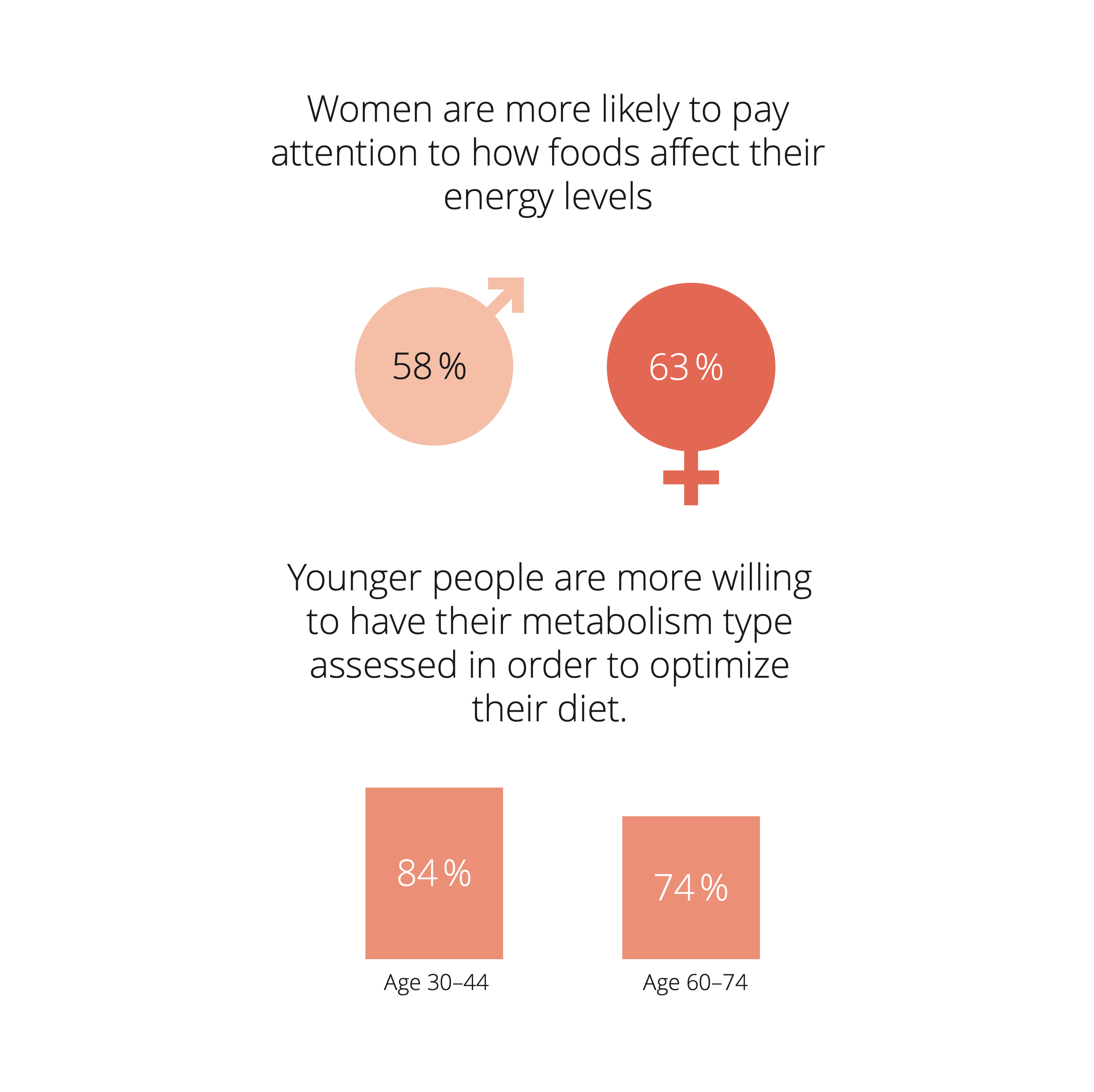
- 61% pay attention to how their diet affects their energy levels.
- Only 31% actively adapt their lifestyle to match their metabolism.
- 79% would be willing to optimise their diet based on their metabolic type.
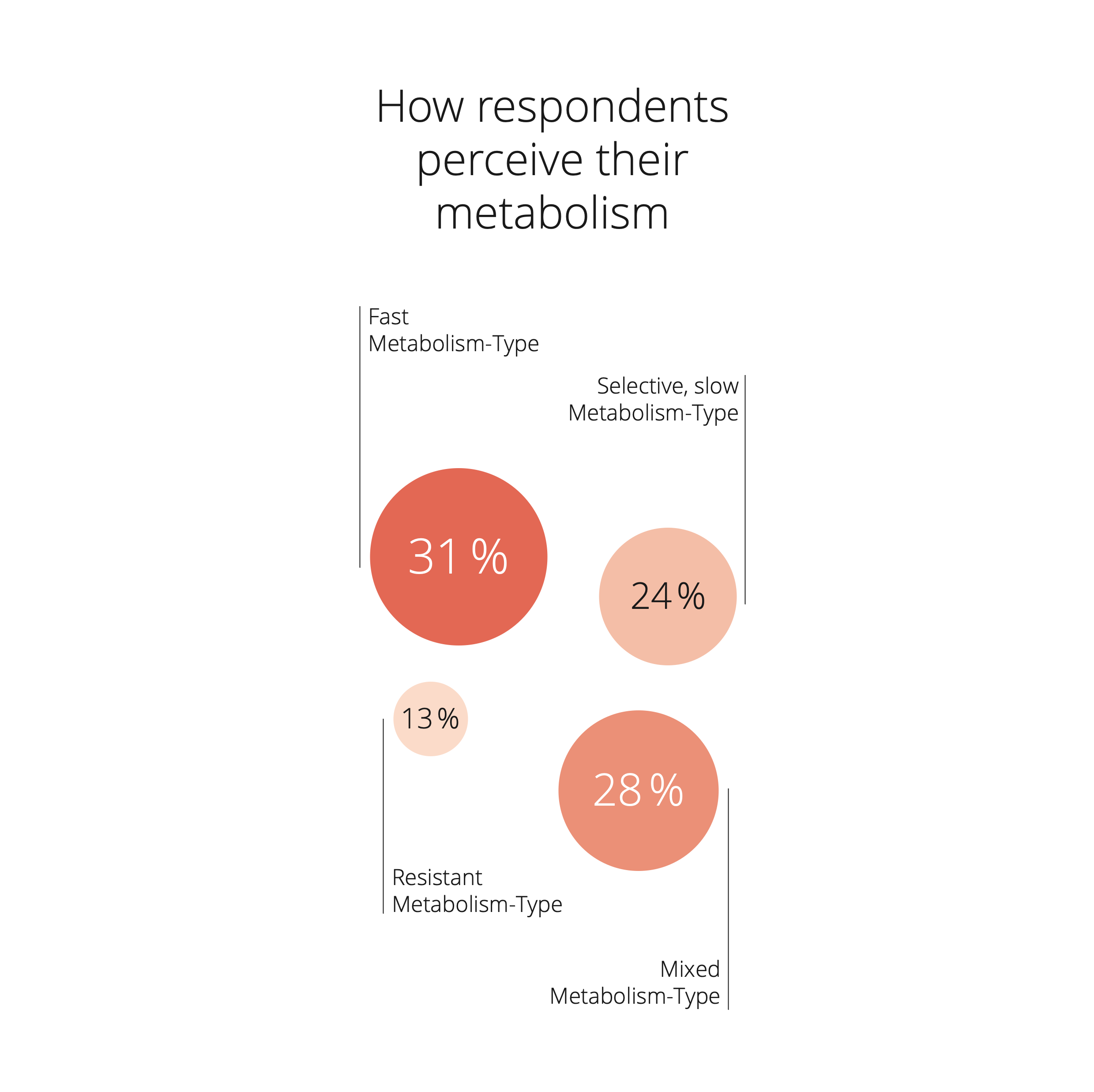
- Most common types in Switzerland are the fast metabolic type (31%) and mixed metabolic type (28%).
Most people feel their metabolism – but don’t understand it
Whether we feel energetic or tired after a meal, or whether we gain or lose weight – we often sense these things intuitively. Yet for many people, this awareness of their own body remains hard to grasp.
- Although about six out of ten respondents have heard of metabolic types, they don’t know exactly what they are.
- At the same time, interest is clearly high. Nearly 80% would be willing to make targeted changes to their diet if they had a better understanding of their metabolism.
Metabolism is evident in everyday life
For most people, metabolism isn’t an abstract biochemical process, but something very specific:
- How do I react to pasta or sweet treats?
- How long do I stay full?
- How do my energy levels change throughout the day?
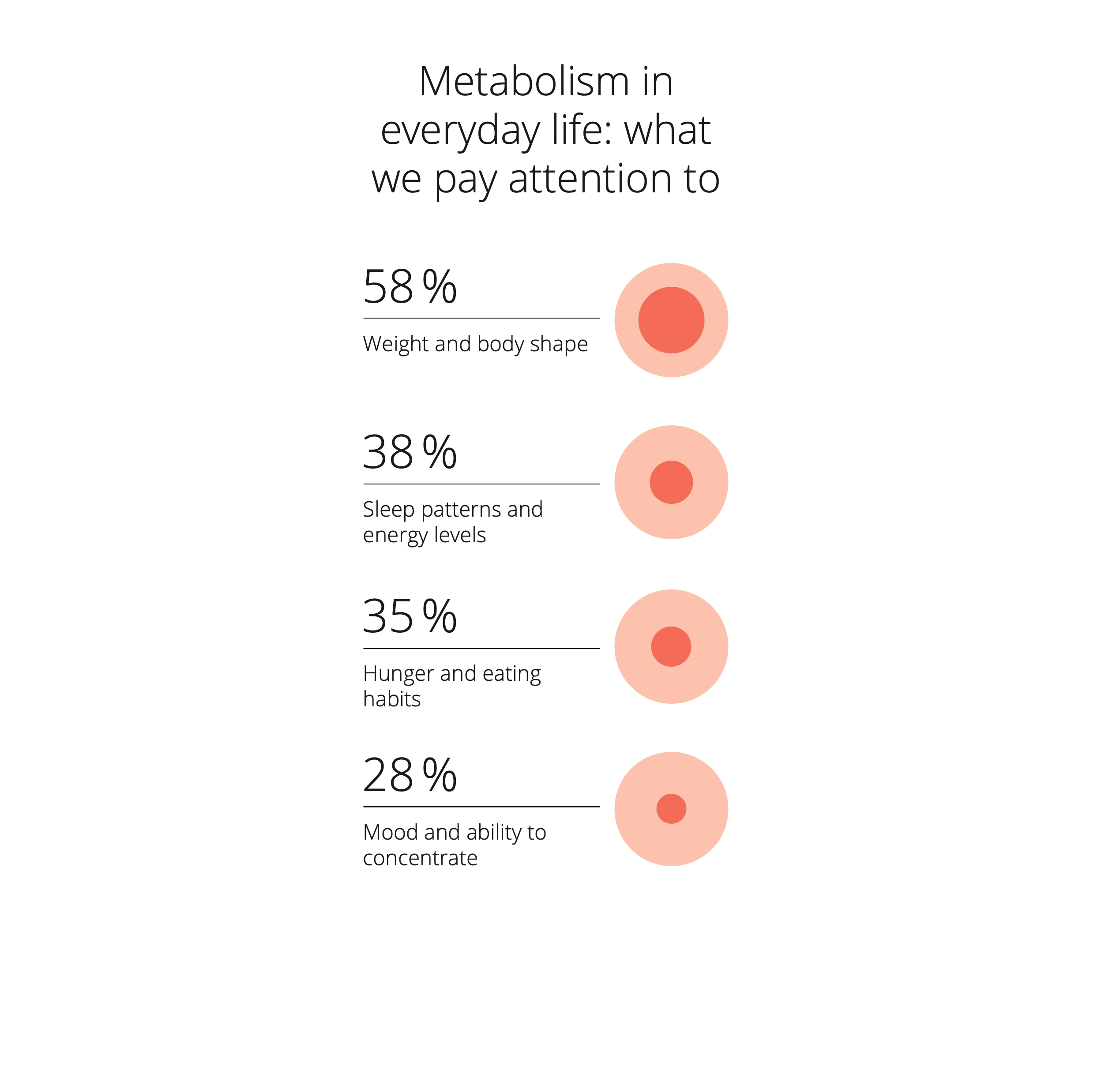
In the survey, 61% of respondents say they consciously monitor how food affects their energy levels. And yet, only a minority take concrete steps to change their lifestyle as a result.
Most Swiss people consider themselves to have a fast metabolism
Based on the study, four typical patterns can be identified. These are not medical diagnoses, but they can help you better understand how your body feels.
Fast metabolic type
- About 31% of respondents identify with this type in a survey. They can usually eat what they want without gaining much weight. Their body processes carbohydrates efficiently and provides a steady supply of energy.
- Challenge: quality over quantity – and enough time to recharge.
Selective metabolic type
- About a quarter of the population describes themselves this way: Slight weight gain, fatigue after carbohydrate-rich meals.
- Challenge: making the right choices – fewer fast-acting carbohydrates, more protein and more fibre.
Mixed metabolic type
- 28% of respondents need one thing above all: balance. A combination of carbohydrates, proteins and fats provides stability.
- Challenge: fine-tuning instead of extremes.
Resistant metabolic type
- 13% of the population finds it difficult to lose weight and needs a personalised diet with targeted adjustments.
- Challenge: patience, organisation and often targeted support.
Surprising differences between the types
A closer look reveals some interesting patterns: People with a fast metabolism rely more on their own instincts and experience. Selective and mixed types pay particularly close attention to the effects of food. Resilient types are the most open to personalised nutrition solutions (83%).
There are also regional differences: A particularly high number of slow metabolic types are found in western Switzerland, while fast metabolic types are more common among younger people.
And last but not least, differences emerge between genders and age groups in terms of how people perceive their own metabolism.
Many people listen to their bodies – few act on it
Although many people have an intuitive sense of their metabolism, putting that knowledge into practice remains a challenge. Only 31% actively adapt their lifestyle to match their metabolism on their own initiative. This shows a similar pattern to that seen with stress: The knowledge is there– but taking the step toward change is difficult.
Conclusion: Understanding your own body better
Metabolism is not a rigid system – but rather a combination of genetics, lifestyle and behaviour. The "Sanitas Health Forecast 2026" study shows that many people intuitively sense what is good for them.
The next step is to consciously use this knowledge. Those who understand their metabolism make better decisions – in everyday life, when eating and for their own health.
What is my metabolic type?

Philippe Knupp is an editor on the Sanitas Health Forecast team and provides editorial support for the annual study on the future of health. With a focus on health communication, he writes about topics that matter to people in Switzerland.
Methodology
| Conducting institute | intervista AG |
| Methodology | Online survey in the intervista online panel |
| Survey period and analysis | Wave 1 – Field time: 09.09 to 20.09.2025; Analysis: October 2025 Wave 2 – Field time: 12.11. to 21.11.2025; |
| Target group | Population aged 18 to 74 in German-speaking Switzerland, French-speaking Switzerland and Italian-speaking Switzerland |
| Sample size | Wave 1: n = 2,532; Wave 2: n = 2,520 |
| Quotas & weighting | Representative of the population by age, gender and language region (interlocked) |