Complementary medicine: overview of natural methods
More and more people are turning to acupuncture, osteopathy or herbal therapies. But how good are they really?
Key points at a glance
- Complementary medicine supplements conventional medicine with a holistic view of health and is primarily used for chronic complaints.
- The scientific evidence varies by method, with good data being available for some methods, while the effectiveness of others remains disputed.
- Complementary medicine is well established in Switzerland and is increasingly being integrated into regular medical care.
- The placebo effect plays a role in every treatment and is also a relevant component of complementary medical therapies.
- Several complementary medical procedures are recognised by basic health insurance, and further services can be covered by supplementary insurance.
Sometimes people turn to complementary medicine because they are looking for something they feel is missing in conventional medicine: more time, a different explanatory model, a new way of connecting with their body. Other people give it a try because their symptoms return even though all the medical findings are normal.
Between hope, scepticism and personal experience, a broad field has established itself that is used millions of times in Switzerland and is surrounded by an astonishing number of myths and misunderstandings.
What is complementary medicine?
Complementary medicine looks beyond individual symptoms: it takes a holistic approach to health. It often complements conventional treatment and can open up new avenues, especially for chronic complaints.
What does complementary medicine include?
Complementary medicine includes a wide range of methods that stem from various traditions and each follow their own ideas about health and illness.
One thing they have in common is that they seek to influence the organism through touch, movement, medicines made from natural substances or energetic concepts. In practice, the spectrum ranges from manual techniques to phytotherapeutic or holistic systems.
-
TCM (Traditional Chinese Medicine)
TCM is made up of various methods such as acupuncture, herbal therapy, qigong and tuina.
It follows a holistic approach and aims to restore balance in the body, especially with complaints that are influenced by several factors or are difficult to categorise.
In recent years, TCM, especially acupuncture, has been the subject of more scientific research. A review article published in the Bundesgesundheitsblatt (Federal Health Bulletin) describes positive effects for certain complaints, such as chronic pain, migraines or nausea during cancer treatment.
At the same time, research shows that the effectiveness varies depending on the method and area of application.
TCM is mainly used to treat chronic or functional complaints as a complement to conventional medicine. Many people use a combination of different methods to alleviate symptoms and support their well-being.
-
Kinesiology
Kinesiology is a comparatively young method. The primary focus is on muscle testing, a technique that indicates which stresses or blockages are causing imbalances in the body and which measures could help.
During treatment, the therapist applies light pressure to individual muscles. If a muscle gives way, this is an indication of a possible stress factor – such as certain foods, physical ailments or emotional stress.
Kinesiology is used in a wide range of areas, from physical complaints, stress and anxiety to learning or concentration problems. They are often used as a complementary approach to identify stressors and find suitable methods of support.
-
Craniosacral therapy
Craniosacral therapy is a very gentle alternative procedure. Using fine pressure and holding techniques on the head, spine or sacrum, therapists try to release tension in the tissue and harmonise the flow of cerebrospinal and body fluids.
It is often used for complaints such as headaches, tension or circulatory disorders. A study published in the Scientific Reports journal also investigated whether cranial techniques can influence the body’s stress response and found evidence that they can alter certain measures of heart rate variability.
Caution is advised with newborns, because the head and brain are particularly sensitive at such a young age. The wrong grips can be harmful, which is why treatments should only be carried out by very experienced specialists.
-
Osteopathy
Osteopathy works exclusively with the hands. Using gentle pressure and mobilisation techniques, therapists try to release tension, improve mobility and stimulate the body’s self-healing powers.
It is often used for musculoskeletal complaints such as back pain, tension, migraines or herniated discs.
As it is very gentle, it is also considered suitable for babies and older people. It shouldn’t be confused with chiropractic treatment, which applies much stronger, jerky grips.
As researchers from the UK and Germany reveal in a current review, expectations and treatment context also play a role in osteopathic treatments in addition to the technique itself.
Factors such as touch, rest and relationship with the therapist can influence the treatment experience. This is an aspect that research would like to consider more closely in the future.
-
Phytotherapy
Phytotherapy uses plants, leaves, roots or seeds, which are processed into teas, drops, tablets or ointments. It is one of the oldest therapies and is often used as a natural remedy to alleviate everyday ailments.
Medicinal plants are used in many areas, e.g. for digestive problems, colds, mild pain or sleep disorders. Preparations such as St. John's wort or caraway are considered classic “home remedies”.
Important: Herbal remedies can also have side effects.
A recent review in the specialist journal Wounds also shows that certain plant substances can help with poorly healing wounds.
Initial indications suggest that they could reduce inflammation or weaken bacterial biofilms. However, medical advice should be sought if symptoms persist.
-
Anthroposophic medicine
Anthroposophic medicine views the human being as an integrated whole, composed of physical, vital, mental and spiritual forces, thus giving rise to an expanded understanding of health and illness.
It has developed scientific approaches to investigate all four forces. Treatment involves the use of medication and non-medicinal therapies such as art therapy and eurythmy (a movement therapy developed by Rudolf Steiner).
-
Hydrotherapy
Hydrotherapy uses water in the form of wraps, baths or underwater massages to relieve acute and chronic pain. Heat, cold or pressure are intended to stimulate circulation, relax muscles and bring the body into balance.
The method is suitable for treating everything from feverish infections to nervousness or tension. A recent systematic review by Indian scientists also shows that various water treatments were able to improve lung function in small studies, for example in respiratory diseases.
Good to know: Hydrotherapy is not useful for all complaints. For example, it can exacerbate the symptoms if used to treat acute inflammation or severe oedema. If in doubt, seek medical advice.
-
Chiropractic treatment
Chiropractic treatment is a manual therapy that uses targeted stimuli – often known as “manipulation” – to improve joint mobility and release blockages. It is often used for back and neck pain.
A review paper published in the American Medical Journal in 2017 concluded that chiropractic treatment may have a “moderate effect” on lower back pain. In the studies, patients often report a certain amount of pain relief in the short term.
Important: Chiropractic treatment isn’t suitable for everyone. It should not be used for herniated discs, osteoporosis, recent injuries or inflammation. A thorough assessment by a medically trained specialist is therefore crucial.
-
Homoeopathy
Homoeopathy works with highly diluted, potentised substances. Basic research is being carried out to determine whether potentised remedies have specific effects.
Many experiments report effects that differ from placebo and find evidence of special physicochemical properties of such preparations, according to the Institute for Complementary and Integrative Medicine at the University of Bern.
Is the effectiveness of complementary medicine scientifically proven?
In the Swiss Medical Journal, anthroposophic doctor Matthias Kröz and Basel professor Carsten Gründemann report that studies on integrative and anthroposophic medicine have increased significantly in recent years – for example on the use of mistletoe therapy in oncology or herbal preparations such as bryophyllum for anxiety symptoms.
Gustav Dobos, professor of naturopathy, says in an interview with the Beobachtermagazine that complementary medicine should not replace conventional medicine, but rather supplement it. Some methods are backed by good data, such as yoga for chronic back pain and depression, meditation for pain and menopausal symptoms, and some phytotherapeutics for pain. Evidence for acupuncture varies by indication, but is partly positive.
Overall, the research remains patchy: for some methods, evidence is weak; for others, encouraging in specific applications.
Health authorities emphasise that complementary methods must not replace conventional therapies, but should complement them selectively.
If you want to find out more about the evidence for individual methods, you can find independent assessments on platforms such as “Medizin transparent”.
A doctor reveals the opportunities of complementary medicine
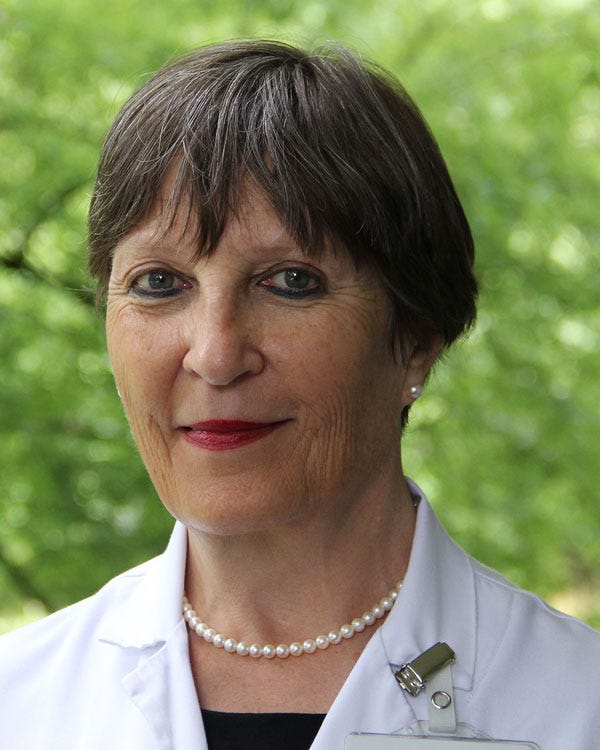
Professor Ursula Wolf heads the Institute for Complementary and Integrative Medicine at the University of Bern and is one of the leading researchers in the field. In conversation, she explains where complementary medicine stands today and where further scientific work is needed.
-
Which developments have had the greatest impact on complementary medicine in recent years?
Professor Ursula Wolf: Today, we are seeing significantly more research activity and, above all, more academic structures – not only at universities, but also at cantonal hospitals – that are systematically involved in complementary medicine.
This institutionalisation has led to a broadening of research methods. In the past, everything had to be examined in double-blind, randomised studies.
This is necessary for certain issues, for example, when the focus is on a single drug. But many medical procedures – whether conventional or complementary – are complex interventions for which practical studies or health services research are more appropriate.
This methodological diversity reflects real-world conditions better and helps to create evidence-based principles, which in turn are relevant for political decisions or cost coverage. Incidentally, even in conventional medicine, not all clinical guidelines are based on large meta-analyses. The attitude that only one type of study is “scientific” is definitely too narrow.
-
How has the collaboration between conventional medicine and complementary medicine changed?
A great deal. The general public has been using complementary medicine for a long time, but in recent years clinical practice has also followed suit. Today, many hospitals have integrative models in which doctors from different specialities work together.
Here in Bern, we can see this in the demand: the number of patients attending our consultations at the Institute of Complementary Medicine is increasing, and more and more conventional specialist areas are turning to us for complementary therapeutic approaches.
Trust arises above all when doctors see in their own daily practice that patients cope better with integrative approaches – for example in oncology or rheumatology.
This exchange has meant that integrative medicine no longer seems exotic, but is now part of the healthcare system in many places.
-
In which areas do you see the greatest potential and where are the limits?
Generally speaking, complementary medicine can be used in all areas, but the requirements differ. Acute medicine often calls for supplementary measures that alleviate symptoms or mitigate side effects.
Complementary medicine plays a bigger role in chronic illnesses because many patients are seeking long-term support. For example, antibiotics are now often avoided for straightforward urinary tract infections if this is medically justifiable.
In these cases, phytotherapeutic or anthroposophic remedies can help to alleviate symptoms and reduce cramps. The need is particularly high for chronic pain or in oncology.
In these areas, we are not in competition with conventional medicine; rather, we complement it in a targeted manner – for example in the case of sleep disorders, fatigue or therapy-related complaints.
-
How does modern research rate the placebo effect in complementary medicine?
The placebo effect plays a role in every medical treatment, regardless of whether the patient takes a paracetamol or has acupuncture treatment. Expectations influence the outcome – in conventional and complementary medicine alike.
Placebo effects don’t arise because a procedure is “complementary”, but because therapeutic situations always generate expectations. Modern research is now able to measure such effects, and they shouldn’t be seen just as a disruptive factor, but as a part of any treatment.
-
Where do you see the biggest research gaps or controversies?
The biggest weakness lies in funding. In Switzerland, only very limited public funding is available for complementary medicine research. This prevents larger studies, even though the research questions exist.
By comparison, in the USA, around 170 million dollars per year are allocated to this field. Such structures are lacking in this country. Complementary medicine manufacturers can’t finance large studies themselves – the costs for a solid clinical study quickly run into the millions.
If you want to improve the evidence base, you also need to improve the funding landscape at the political level.
-
What misconceptions do you encounter most frequently in public debate?
The most common one is that there are “no studies”. It often turns out that this statement is based on a lack of research. Many methods have been investigated, but the results are perceived differently in academic circles.
The difference between occupational groups is also striking: Nursing professionals and primary care providers are usually more pragmatic. They see in everyday life what patients need and how integrative approaches can work.
I also experience great openness among students. They ask nuanced questions and want to understand how different knowledge systems can be combined for the best results. This has increased significantly in recent years.
-
Which therapies or concepts offer promise for the future?
I would focus less on individual methods and more on multimodal concepts: the combination of different therapies, tailored to the individual situation. Many illnesses are complex, which is why interdisciplinary teams are needed.
It is important to look at areas where the clinical need is high. This can vary depending on the specialist area. In oncology, for example, the aim is often to alleviate side effects.
In gynaecology, we’re increasingly working with patients who are looking for complementary options, for example for endometriosis, because conventional options aren’t always enough or are poorly tolerated.
Such examples show that integrative models can be used precisely where conventional medicine reaches its limits.
Is complementary medicine covered by health insurance?
Some complementary methods are covered by basic insurance, including acupuncture, anthroposophical medicine, medicines prescribed by TCM, conventional homoeopathy and phytotherapy.
For costs to be covered, the treatment must be medically necessary and provided by a doctor with a certificate of competence in the relevant discipline (FMH). The benefits are available for a limited period.
Supplementary insurance plans cover a broader spectrum of methods, including osteopathy, Ayurveda and other body and relaxation-based procedures.
Depending on the model you choose, Sanitas contributes up to 80% towards many recognised forms of therapy, with different maximum annual amounts. It is important that both the method and the therapist are recognised by Sanitas.
You can use the Sanitas Cover Check to find out in just a few clicks which costs are covered under your insurance model.