Tips for healthy skin
Healthy skin isn’t built from the outside in. It’s built from the inside out. Here are some helpful tips for keeping your skin healthy.

Key points in brief
- The skin is our largest organ and protects us from environmental factors, pathogens and water loss. It needs to be healthy for these functions to work properly.
- Skincare tailored to your skin type, a balanced diet, enough sleep, daily sun protection and avoiding alcohol, nicotine and excessive sugar all promote healthy skin.
- Stress, emotional strain and lifestyle also have a direct impact on the skin. Supplements are usually only necessary when a deficiency has been confirmed.
Why is healthy skin important?
With a surface area of up to two square metres, billions of cells and weighing up to ten kilogrammes, our skin is the largest and heaviest organ in the body.
But that’s not all: it’s also our most versatile organ. It is the body’s most important protective barrier and performs several functions at once:
- It protects us from environmental factors and injuries.
- It serves as the first line of defence in our immune system by keeping harmful pathogens such as bacteria, viruses, and fungi at bay.
- It ensures that our bodies don’t lose too much water.
“Only healthy skin can maintain these functions,” says dermatologist Marianne Meli. That is why it is so important to properly nourish and care for our skin.
What’s more, healthy skin also protects us from diseases – especially skin conditions that arise when the skin’s barrier function is compromised.
Seven tips: what’s good for your skin?
“Basically, anything that has a positive effect on our overall health is good for the skin,” says dermatologist Meli.
In addition, the skin needs proper care and adequate protection from the sun and other harmful substances.
-
Proper cleaning and care
“Cleanse your skin thoroughly in the morning and at night to remove the impurities that build up on your skin throughout the day and night,” says Meli.
-
Healthy eating
What you eat plays a role in how your skin looks. So choose foods that promote healthy skin.
What foods are good for your skin?
- Berries (vitamin C, antioxidants)
- Citrus fruits (vitamin C)
- Avocado (vitamin E, B vitamins, healthy fats)
- Sweet potatoes, carrots, spinach (vitamin A)
- Tomatoes, peppers (lycopene)
- Salmon, mackerel, herring (omega-3 fatty acids)
- Eggs (vitamin A, B vitamins, zinc, protein)
- Lentils, tofu, legumes (B vitamins, zinc, iron)
- Flaxseeds, walnuts (omega-3 fatty acids)
- Flaxseed oil, rapeseed oil, olive oil (healthy fats)
- Oatmeal (B vitamins, zinc, iron)
- Wholegrain products (selenium, B vitamins)
-
Drink plenty of fluids
Drink between 1.5 and 2 litres every day; water or unsweetened tea is best. In hot weather, during exercise, when you have a fever, diarrhoea or are sweating heavily, your body needs more fluids.
-
Enough sleep
Make sure you get enough sleep. Recent studies also emphasise that there is no single “ideal” amount of sleep for everyone, since sleep needs vary from person to person and across cultures.
What matters is that you wake up feeling refreshed in the morning and get through the day without feeling overly tired.
-
Protect your skin
“Everyone should use sunscreen every day,” says Meli. This is especially true for the face, which is exposed to UV rays every day.
People with fair skin should use sunscreen with SPF 50+, while those with darker skin types can get by with SPF 30 or lower.
“It’s also very important to protect yourself from the sun by wearing the right clothing,” says Meli. That’s often easier than applying sunscreen over large areas of the body.
“People who don’t protect themselves adequately are at a higher risk of developing skin cancer,” Meli explains.
The expert recommends that people at high risk – such as those with a fair skin type, numerous moles or a family history of skin cancer – have their moles checked annually for changes.
-
Avoid alcohol, nicotine and sugar
Alcohol dehydrates the body and can weaken the skin barrier, causing the skin to lose more moisture. Alcohol also promotes inflammation and can stimulate sebum production, which can lead to breakouts and enlarged pores.
As a result, the skin often looks drier and duller – and it ages more quickly.
Nicotine is also harmful to the skin. It makes the skin thinner and more wrinkled, impairs blood circulation, clogs pores, breaks down collagen, disrupts the skin’s PH balance, and slows wound healing.
But it’s not just alcohol and nicotine that take a toll on the skin – sugar does, too. It makes the skin look older faster. The reason for this is that sugar reduces the skin’s elasticity, deepens wrinkles, dries out the skin and makes it look dull.
If there is too much sugar in the blood, it can bind to collagen and elastin in the skin. This makes the fibres stiffer and less elastic, which can lead to wrinkles and sagging skin.
-
Reduce stress
Stress can affect the skin in several ways. It can promote inflammation, weaken the skin barrier and exacerbate existing skin conditions such as acne, neurodermatitis or psoriasis.
Stress-reduction techniques can therefore have a positive effect on the skin's microbiome. A healthy sleep schedule, mindfulness practices such as meditation, walks in nature, or simply getting more exercise can help.
More questions about the skin
Taking proper care of your skin is key to keeping it healthy. It is also important to understand how art forms such as tattoos can affect the skin, which nutrients the skin needs and how mental health influences skin health.
-
Do tattoos damage the skin?
During tattooing, the needle pierces the top layer of skin about 120 times per second. The ink penetrates the underlying layer of skin. This layer is thicker and more leathery, and the ink’s colour pigments are distributed there.
The immune system recognises the pigments in the skin as foreign substances. It sends out immune cells to surround the colour pigments. This ensures that the tattoo ink remains visible permanently.
Piercing the middle layer of the skin creates a superficial wound. This carries a risk of infection. If a tattoo studio doesn’t maintain proper hygiene, infectious diseases such as hepatitis or HIV can be transmitted in the worst case.
-
Nutrients: which vitamins are good for the skin?
Vitamins A to E are particularly beneficial for the skin, says dermatologist Meli. They support cell renewal and collagen production, protect against free radicals and strengthen the skin barrier.
- Vitamin A primarily supports the skin in cell renewal, collagen production and sebum regulation.
- B vitamins help the skin strengthen its barrier function, regenerate and reduce inflammation. Niacin (B3) and biotin (B7) are particularly important.
- Niacin strengthens the skin barrier and helps the skin retain moisture.
- Biotin supports the production of keratin – the structural protein that keeps hair, nails and much of the outermost layer of the skin strong, resilient and elastic.
- Vitamin C promotes the production of collagen, the structural protein that gives the skin its firmness and elasticity. This helps support wound healing. It also helps neutralise oxidative stress caused by UV radiation and environmental pollution.
- Vitamin D supports the skin’s barrier function, regulates the growth and maturation of skin cells and has anti-inflammatory properties.
- Vitamin E acts primarily as a powerful antioxidant in the skin, protecting cells from damage caused by free radicals (e.g. from UV light) and thus helping to prevent premature skin ageing. It also supports the skin barrier, improves hydration and promotes wound healing.
Marianne Meli points out that vitamin supplements are generally only beneficial if there is an actual deficiency. “An overdose of vitamin A, for example, can harm the body and skin.”
Helpful tip: Use skincare products containing vitamin C in the morning. This antioxidant traps free radicals, which are mainly produced during the day due to UV radiation and environmental stress.
However, you should use skincare products containing vitamin A in the evening, as they make the skin more sensitive to UV rays and prone to irritation.
-
Are dietary supplements necessary for healthy skin?
In the beauty industry, collagen is touted as a skin rejuvenator. What does the expert say? “Unfortunately, marketing claims are made about collagen supplements that are not clearly supported by scientific evidence,” says Meli.
This is because the body cannot absorb foreign collagen directly. “Our bodies first break down animal collagen into its constituent parts,” says the dermatologist, “and then have to use those parts to produce our own collagen again.”
Currently, there is a lack of independent studies demonstrating the positive effects of oral collagen supplements on the skin. According to the expert, treatments such as collagen-stimulating injections, specific laser treatments or micro-needling are more effective methods for boosting the body’s own collagen production.
The expert’s verdict is equally cautious when it comes to other products marketed as miracle cures, such as those containing hyaluronic acid, multivitamins or antioxidants: “The scientific evidence regarding the effectiveness of these products is inconclusive and depends heavily on the product, the quality of the studies and the funding.”
When it comes to dietary supplements, Meli generally advises: “People who eat a balanced diet don’t need dietary supplements.” However, such products can be useful if a deficiency exists due to an unbalanced or restricted diet.
-
How are the mind and skin connected?
Our skin is closely connected to our mental well-being. It is not for nothing that it is considered a mirror of the soul: “Skin problems often signal that we are dealing with inner conflicts,” says Meli. These can include stress, mental health issues or sleep disorders.
Researchers refer to this as the “brain-skin axis”. It describes the direct connection between the brain, nervous system, immune system and the skin. “This means that emotions such as anxiety or psychological stress put the nervous system on high alert.” “This causes the body to release more cortisol,” says Meli.
Here’s what happens to your skin: Higher levels of cortisol in the body weaken the skin'’ barrier function, thereby promoting inflammation, redness, itching, eczema or neurodermatitis.
The brain-skin axis is not a one-way street: the skin also communicates with the brain. For example, when there is inflammation or itching, nerves in the skin send signals to the spinal cord, which are then transmitted to the brain. “This causes the body’s stress response to become even more activated – creating a vicious cycle,” says Meli.
How do I take proper care of my skin?
-
Normal skin
- Cleansing: Choose mild products, such as cleansing milk, wash gel or cleansing foam, to prevent your skin from losing too much moisture.
- Skincare: Use a light cream that contains a balanced blend of oils and moisture.
- Sunscreen: Apply sunscreen (SPF 30–50) as the last step in your morning routine. For everyday use, a day cream with SPF may be sufficient, depending on your level of sun exposure.
-
Dry skin
- Cleansing: Use a mild, moisturising cleansing milk, lotion or oil. Avoid harsh body washes.
- Skincare: A rich, lipid-rich cream containing ceramides and humectants such as glycerin or hyaluronic acid is ideal for strengthening the skin barrier and locking in moisture.
- Sunscreen: Apply sunscreen (SPF 30–50) as the last step in your morning routine. For everyday use, a day cream with SPF may be sufficient, depending on your level of sun exposure.
-
Combination skin
With combination skin, the most important thing is to control the oily areas (T-zone) without drying out the drier areas.
- Cleansing: Use a mild cleansing gel or wash lotion with a PH-balanced formula that thoroughly cleanses without drying out the skin. Avoid moisturising products.
- Skincare: Choose lightweight, oil-free formulas containing hyaluronic acid or other moisturising ingredients such as glycerin or panthenol. These are often the best choice for preventing oily skin from feeling heavy.
- Sunscreen: Apply sunscreen (SPF 30–50) as the last step in your morning routine. Use a lightweight, non-comedogenic sunscreen – that is, a formula that doesn’t clog pores and therefore doesn’t cause additional blackheads or pimples.
-
Oily skin
- Cleansing: Use a mild, water-soluble cleansing gel twice a day that cleanses thoroughly without drying out the skin. Avoid bar soap and harsh ingredients.
- Skincare: Even oily skin needs moisture. Choose lightweight, oil-free gels or serums containing hyaluronic acid or niacinamide. Avoid heavy creams that clog your pores.
- Sunscreen: Apply sunscreen (SPF 30–50) as the last step in your morning routine. Use a lightweight, non-comedogenic sunscreen – that is, a formula that doesn’t clog pores and therefore doesn’t cause additional blackheads or pimples.
If you have skin problems such as acne, it is advisable to consult a specialist to find the right skincare routine.
-
Sensitive skin
- Cleansing: Use a mild, soap-free cleansing lotion that preserves the skin’s natural acid mantle and doesn’t dry it out. Gently apply the product with your hands – avoid using cleaning brushes or scrubbing vigorously. Rinse your face with lukewarm water.
- Skincare: Choose products that are free of fragrances, parabens and alcohol to prevent irritation. If you have skin problems, such as acne or rosacea, it is advisable to consult a specialist to find the right skincare routine.
- Sunscreen: Apply sunscreen (SPF 30–50) as the last step in your morning routine. For everyday use, a day cream with SPF may be sufficient, depending on your level of sun exposure.
-
Mature skin
Starting around age 45, the skin gradually loses its elasticity, moisture and protective function. It is important to provide the skin with the moisture and elasticity it needs.
- Cleansing: Choose a PH-neutral, soap-free formula with nourishing ingredients (e.g. glycerin, panthenol and small amounts of oils). Avoid harsh cleansers, as they can exacerbate wrinkles, dryness and tightness, since the skin produces less sebum and lipids as we age.
- Skincare: In addition to moisturisers, mature skin needs ingredients such as collagen and retinol to help maintain its elasticity.
- Sunscreen: Apply sunscreen (SPF 30–50) as the last step in your morning routine. For everyday use, a day cream with SPF may be sufficient, depending on your level of sun exposure.
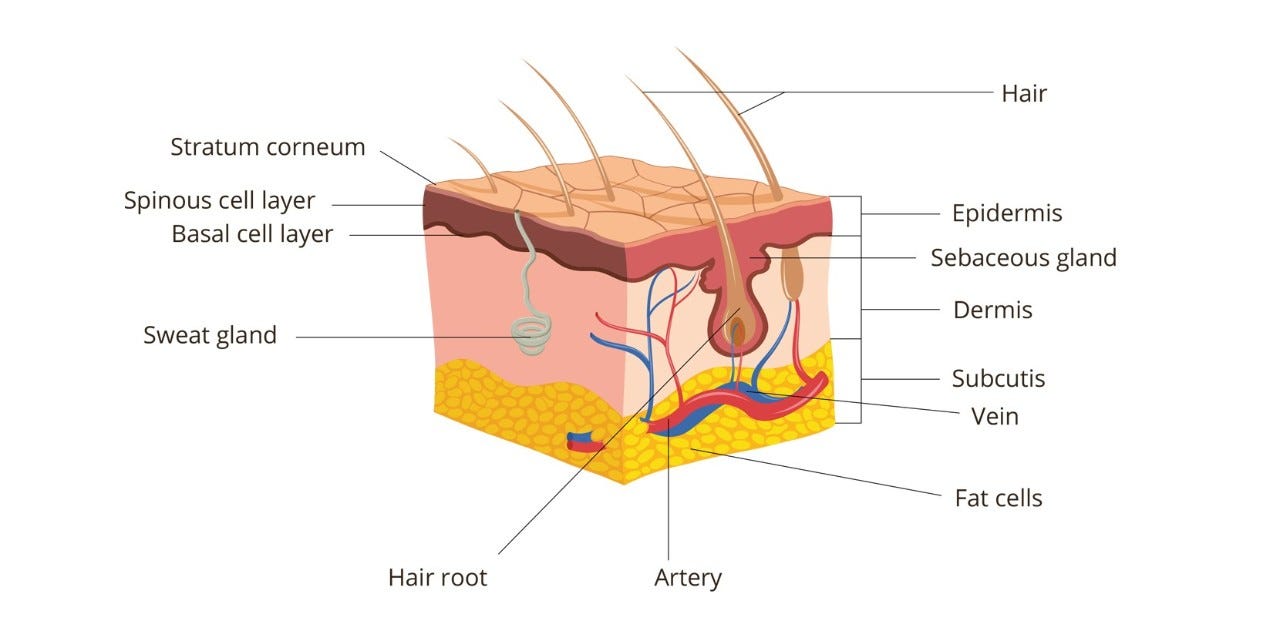
Layers of the Skin: Structure of the Skin
-
The epidermis
The epidermis is the outermost layer of the skin and is about as thick as a sheet of paper. It consists of two layers: The stratum corneum acts as a protective barrier against external factors such as injuries, environmental influences, pathogens and dryness.
The basal layer lies directly beneath it and produces new cells around the clock, allowing the stratum corneum to renew itself constantly.
-
The dermis
The dermis lies beneath the epidermis. Its strong collagen and the protein elastin make it stretchy and elastic. Together with moisture-retaining hyaluronic acid, it forms the basic structure of the dermis.
This layer of skin contains nerves, blood vessels, lymph vessels, hair follicles and sebaceous glands. It supplies the skin with nutrients and regulates body temperature through the sweat glands.
Fibroblasts regenerate the dermal matrix every day. Fibroblasts are connective tissue cells that keep our skin elastic, firm and well-hydrated.
The nerve fibres in the dermis send information about touch and vibration to the brain, allowing us to perceive these sensations.
-
The subcutaneous tissue (subcutis)
The subcutis is the deepest layer of the skin. It consists of fat and connective tissue. It serves as cushioning, protection against physical stress, an energy store and a means of regulating body temperature.
Conclusion
With the right knowledge – and the right measures – you can improve your skin’s health in just a few steps.
Don’t forget: anything that boosts our overall health also supports the health of our skin. In addition, your skin needs daily care and consistent sun protection that is suited to your skin type.