6 home remedies to help with haemorrhoids
Haemorrhoids are unpleasant. They burn, itch and hurt. Simple home remedies such as sitz baths or cider vinegar can ease the symptoms.
What are haemorrhoids?
Oozing, itching, burning, pain during bowel movements and bright red blood on the toilet paper – people who suffer from haemorrhoids don’t like to talk about them.
Strictly speaking, however, everyone has haemorrhoids. They are part of the rectum and help to seal off the anus from the outside as nodular extensions of the blood vessels.
The above problems only occur when they become inflamed and enlarged.
Home remedies to treat haemorrhoids naturally
Simple home remedies can help soothe the symptoms of inflamed haemorrhoids. These six measures are anti-inflammatory and help relieve the itching:
-
Warm sitz bath
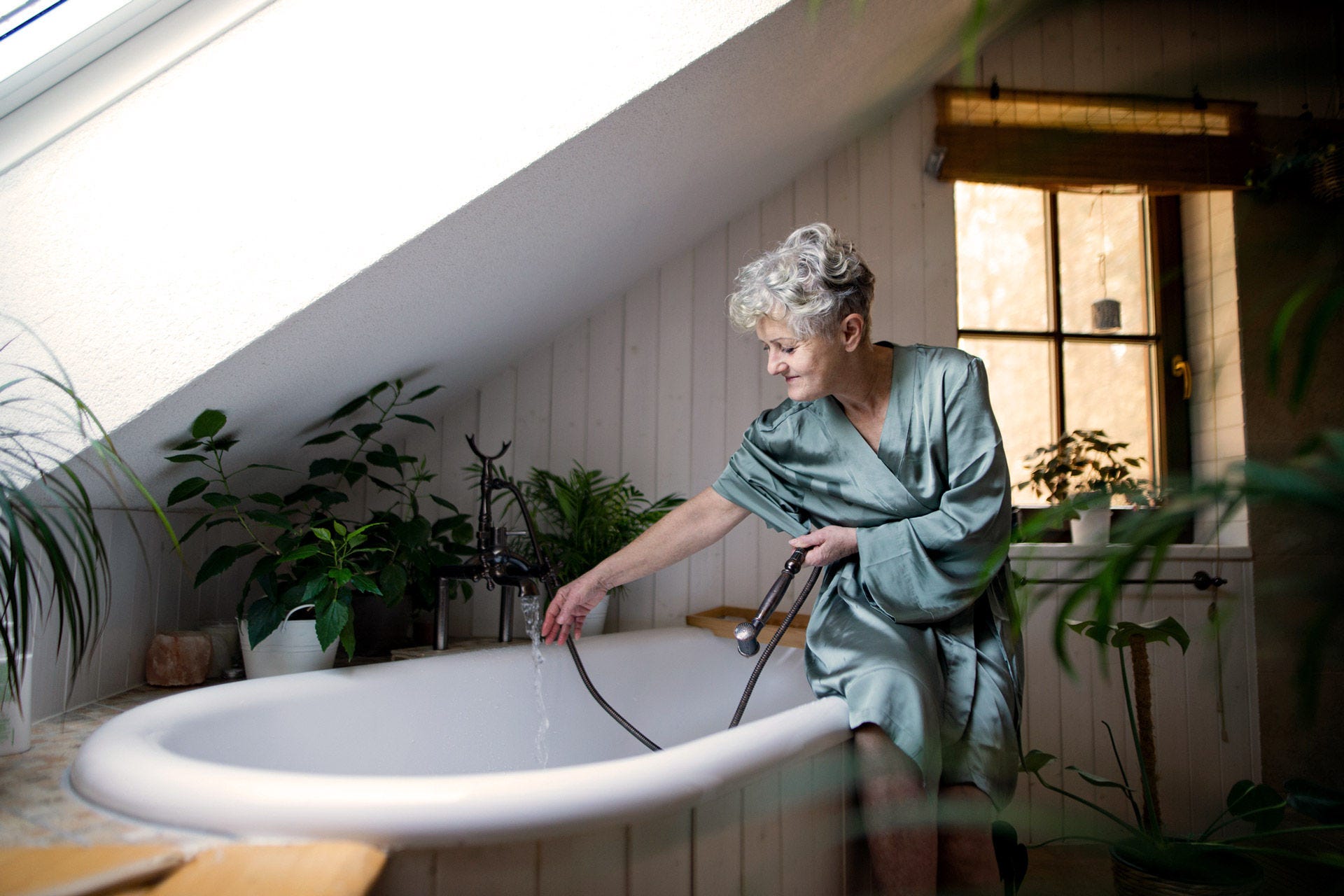
Sitz baths are one of the best-known home remedies for haemorrhoids. They ease the itching and pain and promote blood circulation.
For a soothing sitz bath, fill your bathtub or a sitz tub with water heated to 37 degrees and add arnica, chamomile, lavender, oak bark, plantain leaves, witch hazel or tea tree oil. These have a calming and anti-inflammatory effect.
-
Quark compresses
Quark has a pleasant cooling, pain-relieving and anti-inflammatory effect. Simply take some quark from the fridge, spread it on a cloth and apply for 20 minutes. Then gently wash it off with lukewarm water and pat dry.
-
Ointment
Chamomile helps with inflammation and supports wound healing. Chamomile ointments are available from the pharmacy and are easy to apply. Calendula ointment or an ointment with witch hazel bark extract also help with haemorrhoids.
-
Cider vinegar
Cooking vinegar really helps against itching. Dilute with water in a ratio of 1:2 and dab onto the anus with a cotton pad.
Alternatively, you can fill an empty drinking bottle with the liquid and use it in the toilet several times a day to wash your anus.
-
Magnesium
Magnesium is a natural laxative and helps against constipation. Try to prevent constipation, because hard stools are painful when haemorrhoids are enlarged.
Around 300-600 mg of magnesium per day is recommended for constipation to soften the stool. You can take magnesium in capsule or powder form.
But be careful, because too much can cause diarrhoea.
-
Cushion
Special cushions have a recess in the middle so they don’t exert any pressure on the painful area on the bottom.
Alternatively, you can roll up a thick towel and place it in a U-shape under the buttocks.
Tips: how to prevent haemorrhoids
Sit less: Sport and exercise can help make sure the haemorrhoids don’t get any bigger. It is also important to eat a high-fibre diet and drink sufficient fluids.
If you have haemorrhoids, you should only go to the toilet when you really need to. And you should never strain too much.
And when you’ve had a bowel movement, make sure you clean the anal area thoroughly afterwards. It is important to keep the anal region clean and dry, and only use soap and wet wipes sparingly, if at all.
Haemorrhoids in pregnancy
Pregnant women are particularly prone to haemorrhoids, as hormonal changes during pregnancy dilate blood vessels and the growing baby puts pressure on the pelvic veins.
The same home remedies that are generally recommended for haemorrhoids are suitable for pregnant women.
And the good news is that haemorrhoids during pregnancy are often mild and of low severity. In most cases, the haemorrhoids disappear quickly after the birth.