Lumbago or slipped disc? Recognise the difference and take appropriate action
When is it lumbago and when is it a slipped disc? If you recognise the warning signs, you can avoid lasting damage.
Key points at a glance
- Lumbago is a sudden, painful muscle spasm in the lower back without neurological deficits, which usually resolves within 1–2 weeks.
- A slipped disc involves structural damage to the intervertebral disc accompanied by radiating pain that can last for weeks or months.
- Lumbago pain is localised in the lower back; with a slipped disc, it often radiates into the buttocks, leg, or arms and fingers.
- In the event of fever, bladder or bowel problems, numbness in the perineal area, paralysis or worsening neurological symptoms, you should seek immediate medical attention.
- Both conditions can be prevented by keeping physically active, doing specific exercises and developing daily habits that are gentle on the back.
Lumbago vs. slipped disc: what’s the difference?
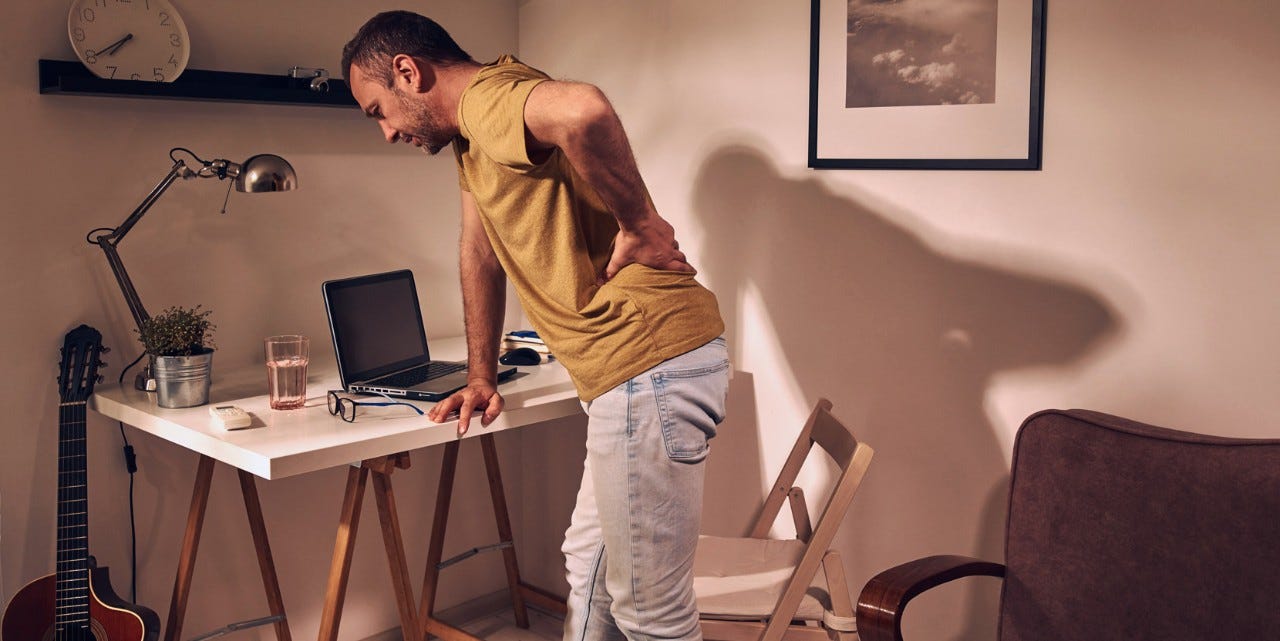
When we suddenly feel a twinge in our lower back, we often ask ourselves: is it just lumbago or are my intervertebral discs affected?
It’s daunting not knowing what to do when you’re in severe pain, which makes it all the more important to recognise the differences in acute cases so you can take the right action.
- Lumbago: Lumbago is an acute muscle strain in the lower back that occurs suddenly as a result of incorrect movements, such as bending over or twisting.
- Slipped (or herniated) disc: A slipped disc involves structural damage to the spine. In this case, intervertebral disc tissue protrudes between two vertebrae and presses on the surrounding nerve or the spinal cord.
How can I tell if I have lumbago?
Lumbago differs from other back conditions primarily in that it doesn’t cause neurological symptoms such as numbness or paralysis. Coughing or sneezing often makes lower back pain worse.
-
Causes
Everyday movements such as bending, lifting, twisting or stretching can cause a sudden cramp in the muscles, ligaments and joints in the lower back. This causes severe pain known as lumbago.
-
Symptoms
- Severe lower back pain that limits movement
- Sudden, sharp or stabbing pain in the lower back or above the buttocks, usually on one side
- Tight back muscles with limited range of motion – bending, stretching or twisting are barely possible
- A stiff back and mild pain on palpation of the lumbar spine
-
Duration
Lumbago usually subsides within 1–2 weeks.
-
Treatment
If your symptoms last longer than 5 days or if the pain gets worse regardless of how long it has lasted, you should see your family doctor.
You should also see a doctor if you experience neurological symptoms (such as tingling or numbness) or develop a fever.
Otherwise, lumbago usually goes away on its own. No medical treatment is necessary.
-
Effective prevention
Lumbago can be effectively prevented through regular strengthening of the back and core muscles and by adopting habits that are kind to the back.
How to reduce the risk of sudden tension in the lower back:
- Pelvic circles: Stand with your feet hip-width apart, place your hands on your hips, and slowly and smoothly circle your pelvis in both directions for 2 minutes. This exercise improves core mobility and strengthens the deep back muscles.
- Back extension: Lie on your front and slowly lift your arms and legs slightly off the floor. Look towards the mat to protect your neck. Hold the pose for 5–10 seconds; do 10–15 repetitions. This strengthens the lower back muscles.
- Forward bend with a chair: Stand with your feet hip-width apart, bend forward at the waist, and place your hands on the seat of a chair for support. Your legs are straight. Now bend and straighten your legs. This activates and stretches the muscles on the back of the legs.
- Hip flexor stretch: You can do this exercise either lying on your stomach or standing up. Gently pull one heel toward your buttocks and hold your foot in place with your hand. Hold this position for at least 30 seconds. Do 3–5 repetitions on each side.
In your daily life, adopt habits that support your back:
- Back-friendly lifting: Always bend at the knees when you pick something up, and keep your back straight. Carry the load near to your body.
- Exercise: Swimming, cycling, doing yoga or walking 2 to 3 times a week helps keep your muscles flexible and strong.
- Posture and warmth: Sit correctly, keep your back warm, and avoid cold and draughts.
How can I tell if I have a slipped disc?
You usually can’t diagnose a slipped disc yourself, as the symptoms can be confused with those of other back conditions. However, typical symptoms include severe back pain that radiates into the arms or legs, often accompanied by a tingling sensation or numbness.
-
Causes
A slipped disc typically develops gradually as a result of degenerative changes, most often due to age, or due to improper strain on the intervertebral discs.
Primary causes include:
- Natural degeneration: Starting as early as age 20, intervertebral discs lose fluid and elasticity because the intervertebral disc’s nucleus (nucleus pulposus) is less able to retain water from that point on.
- Acute injuries: Sudden strain, such as heavy lifting or accidents
In addition, there are risk factors that can increase the likelihood of a slipped disc:
- Obesity
- Prolonged sitting
- Weak back/core muscles
- Lack of exercise
- Poor posture
- Genetic predisposition
-
Symptoms
- Radiating pain: The pain in the lower back radiates as a burning or stabbing sensation into the buttocks, thighs, calves or toes
- Numbness, tingling or weakness in the legs or arms
- Very limited range of movement
- Neck pain radiating into the shoulders, arms or fingers.
-
Duration
A slipped disc often heals within 4 weeks to 3 months with conservative treatment. In severe cases, surgery may be necessary.
-
Treatment
Around 90% of cases can be treated in 4 to 12 weeks through physiotherapy, drugs and rest instead of surgery.
The body can often break down the protruding part of the intervertebral disc on its own, with the pain subsiding as a result.
Surgery is required in around 10% of all cases to remove the herniated disc tissue.
Surgery is indicated when neurological deficits such as muscle weakness, paralysis or bladder or bowel dysfunction worsen, as well as in cases of severe, treatment-resistant pain after 6–12 weeks of conservative therapy.
-
Effective prevention
You can significantly reduce the risk of a slipped disc with targeted exercises. It is important to strengthen the back muscles and adopt habits that are gentle on the back.
- Back and ab exercises: Swimming backstroke or doing yoga, Pilates or strength exercises such as planks 2 to 3 times a week help stabilise the spine.
- Core stability: Do exercises that strengthen the pelvic floor and deep abdominal muscles. A strong core helps prevent problems with the intervertebral discs.
- Regular exercise: Activities such as swimming or walking help relieve pressure on the intervertebral discs over the long term.
- Lifting without straining your back: Bend your knees when lifting heavy objects. Carry loads close to your body and avoid putting strain on one side.
- Posture and breaks: Avoid sitting for long periods of time; take a break every hour, stand up, and walk around a bit. If you spend a lot of time sitting at your desk, you should use an ergonomic chair.
- Make your daily routines more active: Also, take the stairs instead of the lift and get off the bus one stop earlier – the aim is to incorporate more exercise into your existing daily routines.
- Lifestyle: Avoid nicotine, eat a balanced diet and drink plenty of water.
Sport after a slipped disc
After a slipped disc, you’ll need patience to get back into sports. Start with gentle stretches and light aerobic activities such as swimming, Nordic walking or moderate cycling. These activities stimulate blood circulation and improve flexibility without straining your back.
Step-by-step you can start doing more activities that strengthen your back. You should only resume physical activity under the supervision of a qualified doctor and physiotherapist. Wait 4–6 weeks after the acute pain has subsided before resuming more intense physical activity.
Video: Lumbago or herniated disc?
Red flags: when should I see a doctor without delay?
The warning signs differ between lumbago and a slipped disc. What you need to know:
-
Lumbago
With lumbago, serious red flags are rare, as it is usually just harmless muscle tension. However, there are warning signs that may indicate other causes, such as infections or fractures, and require immediate medical attention:
- fever, chills or night-time pain: these may be an indication of an infection (e.g. Spinal inflammation).
- Sudden bladder or bowel problems, or numbness in the perineal area (buttocks, inner thighs, genitals).
- Severe paralysis or complete loss of strength in the legs.
And there are warning signs that you should also act on, but which are far less time-sensitive:
- If the pain lasts longer than 3–5 days or gets worse despite applying heat or taking pain relievers.
- If the pain radiates, or if you feel tingling or weakness in your arms and legs.
- In case of pre-existing conditions (e.g. osteoporosis, tumours, corticosteroid therapy).
-
Slipped disc
There are clear red flags for slipped discs. These are serious warning signs that indicate nerve damage or compression of the spinal cord and require immediate medical evaluation – otherwise, there is a risk of permanent damage.
- Bladder/bowel disorders: Incontinence, urinary retention or loss of control over bowel movements.
- Severe paralysis: Sudden muscle weakness or paralysis in the legs, feet or buttocks (e.g. inability to lift the foot).
- Saddle block anaesthesia: Numbness in the perineal area (buttocks, inner thighs, genitals).
- Progressive neurological deficits: Increasing numbness, tingling or weakness despite rest.
- Night-time pain or fever: Unexplained worsening of pain at night or signs of infection.
First-aid: are there exercises I can do?
Whether you have lumbago or a slipped disc, there are gentle steps you can take right away to help improve your condition.
-
Lumbago
- Apply heat: Place a hot water bottle, a cherry pit pillow or a heating pad on the sore spot in your lower back – this will help relax the tight muscles.
- Gentle exercise: Don’t just rest. If you’re in pain, it’s important to keep moving. Take slow walks or practice deep abdominal breathing, without pushing yourself too hard.
Specific exercises can also help heal the lumbago. The key here is not to further aggravate the tense muscles, but to gently mobilise them:
- All-fours (cat-cow): Starting on your hands and knees, arch your back gently (cow) on an inhale and bring your head up. Then exhale, rounding your back and gently pulling your chin towards your chest (cat). Do this exercise several times a day, 5–10 repetitions.
- Step position: Lie on your back on a comfortable surface. Place your lower legs and feet on a chair with your knees bent at 90 degrees. Stay in this position for 10–20 minutes. This takes the pressure off your lower back.
-
Slipped disc
If a slipped disc is suspected, only very gentle measures are recommended during the acute phase.
Some good immediate steps to take are:
- Step position: Lie on your back on a comfortable surface. Place your lower legs and feet on a chair with your knees bent at 90 degrees. Stay in this position for 10–20 minutes. This takes the pressure off your lower back.
- Knee to chest stretch: Lay on the floor, extend your left leg straight out on the floor, and gently pull your right knee toward your chest. Hold this position for up to 30 seconds, then change legs. This exercise reduces pressure on the nerve roots and improves spinal mobility.
Avoid bending, twisting, lifting and excessive stretching. These movements make the slipped disc worse.
What costs does health insurance cover?
Treatments for lumbago and a slipped disc are covered under basic insurance, subject to your deductible and copayment. If the symptoms are caused by an accident, the costs of treatment are covered by statutory accident insurance.
-
Lumbago
The following benefits – subject to your deductible and copayment – are covered under basic insurance:
- Visits to the doctor & medication: Examinations, pain killers, anti-inflammatory drugs, muscle relaxants.
- Physiotherapy: Up to 9 sessions per prescription.
- Imaging & therapy: X-rays/MRT in case of red flags, heat or cold therapy, injections
-
Slipped disc
The following benefits are covered, subject to your deductible and copayment:
- Outpatient treatment: Visit to the doctor, medication (pain killers/anti-inflammatory drugs), physiotherapy (max. 9 sessions per prescription), occupational therapy
- Imaging & medical aids: X-rays/MRT, bandages/leg braces, injections
- Inpatient treatment (OP): Minimally invasive operations at accredited hospitals, rehabilitation (with commitment to cover costs).