Mental illness: helpful tips for family members
Supporting family members with a mental illness often takes a heavy toll on one’s own strength. Relatives will find helpful tips here.

Key points at a glance
- Over two million relatives in Switzerland support people with mental illnesses – thereby removing a significant burden from the healthcare system.
- These relatives are often under great strain themselves and at risk of developing mental health problems, particularly children and adolescents.
- Listening, empathy and reliability are essential means of support for those affected, while self-protection and setting boundaries are just as important.
- Knowledge and guidance in dealing with mental illness are essential for relatives, with specialised contact points and courses available to this end.
- Seeking help early and taking regular breaks are crucial to preserving one’s own health.
In Switzerland, more than two million people support someone with a mental illness as relatives or close friends.
Their contribution is indispensable, especially in a healthcare system where waiting times for outpatient and inpatient psychiatric and psychotherapeutic treatment can often last for months.
“Relatives quite literally help keep the system running,” says Silvia Andres, who cared for her mother during many years of depression. Today, she supports other relatives of those with a mental illness through the organisation Stand by You Switzerland.
Caregiving relatives put their own health at risk
Many relatives find themselves in situations where they need to look after themselves and the ill person simultaneously, often without sufficient knowledge about the illness, while also juggling work and childcare.
“Such stressful situations can endanger the caregivers’ own health,” says Andres. Studies clearly show that relatives caring for people with mental illnesses have a significantly higher risk of developing conditions such as depression or anxiety disorders themselves.
When children care for their parents
This burden also affects young people. Many children and adolescents care for a mentally ill parent. Researchers refer to them as “young carers”. In Switzerland, around 8% of children aged 10 to 15 are affected, which corresponds to roughly 38,400 children and adolescents. Among those aged 16 to 25, the figure rises to about 15%.
And this also takes a toll on children and adolescents. Studies show that children who care for an ill parent later face a three to sevenfold higher risk of developing mental health problems themselves.
For children of parents with schizophrenia, the risk can be as high as 40%, while children of parents with depression also have a significantly increased risk, often cited at around 37% or more. “Experts believe the true numbers may be even higher,” says Andres. This underlines the importance of better support for family members.
How can I help somebody with a mental illness?
Andreas cites four basic principles when helping somebody with a mental illness:
-
Listening
The most important form of support is listening. That may seem trivial, but it isn’t. Relatives often instinctively want to help their loved ones by offering advice and solutions – instead of simply listening.
“Learning to listen without trying to fix everything can be the most supportive approach,” says the expert. Showing interest and empathy are important. Simple questions like “How are you feeling today? What are you experiencing?” can make a meaningful difference.
-
Being there
Being present and reliable is another key aspect. “When affected individuals feel that someone is there for them and can be depended on, it creates a sense of safety that can support recovery,” explains Silvia Andres.
Regularly checking in and offering help reinforces this feeling of security.
-
Finding sources of help
Relatives can also help by encouraging professional support and assisting in finding suitable services. “Pointing out options that may help reduce suffering is an important step," says Andres.
-
Acquiring knowledge
Acquiring knowledge about the illness and appropriate ways of dealing with it is essential. “Many relatives feel powerless or fearful because they share the pain of the affected person and worry about doing something wrong,” says Andres.
She recommends the “First Aid for Mental Health” courses offered by the ENSA platform. The platform was launched in 2019 by the Pro Mente Sana Foundation with support from the Beisheim Foundation. It provides practical guidance in dealing with mentally ill family members.
In addition, there are specific forms of support and tips depending on the particular illness:
-
Depression
- For depression, it is important to accept the condition as a real and treatable illness, not as a weakness.
- Feelings should be taken seriously – without trivialising them.
- Open conversations about worries, fears and needs should take place without blame or pressure.
- Warning signs of suicide must always be taken seriously, discussed clearly, and professional help should be organised immediately in acute situations.
Useful links
-
Addictive disorders
- When dealing with addiction, you should offer support while clearly setting boundaries to protect your own health. Recovery requires insight and commitment from the affected person.
- You should seek information and support in dealing with addictive disorders.
- Avoid threats such as: “If you drink again, I’ll leave you.” Statements like this are understandable, but they don’t help the person affected or your situation as a couple.
- Usually, relatives are part of the addiction system through their behaviour. This is the case, for example, when a wife buys vodka for her husband who is addicted in order to avoid his outbursts of anger at home. Or someone conceals from those around them that their partner is an alcoholic. Self-help groups can help you break out of these patterns.
- It is also important to think about your personal plans in the event of a relapse. How will you react if your relative begins to consume again?
- Regularly reflect on whether the relationship still feels healthy and what support might be needed, such as couples therapy or separation.
Useful links
-
ADHD
- For children with ADHD, a simple and structured daily routine, with enough space for activities that they enjoy and that support their self-esteem, is recommended.
- Avoid any advice that you should simply discipline your child more harshly. This approach is counterproductive with ADHD sufferers.
- Openly address the condition in your social circle.
Useful links
-
Borderline personality disorder
- Relatives of people with borderline personality disorder often feel as though they are walking on eggshells. One wrong word and the person goes through the roof.
- It’s important that you as a partner are involved in therapy to help clarify difficult situations and reach agreements.
- The emotional experiences of people with borderline personality disorder are often difficult for others to understand. Learn to validate the emotions of the affected person. This means putting yourself in the other person’s situation and initially acknowledging their point of view. Afterwards, you can point out alternative ways of looking at the situation.
- It is important that relatives protect their own space and set boundaries, even though fear of abandonment is often strong in people with borderline disorder. Something as simple as attending a weekly dance class can already trigger major conflicts. As a result, relatives often give up their hobby, but this isn’t advisable.
- Couples therapy can help establish shared rules – for example, to create space for you as a partner.
- Regularly reflect on your own needs and whether you want to remain in the relationship. Listen to your own needs; don’t stay solely for the other person’s sake.
Useful links
-
Bipolar disorder
- Get involved in therapy. Clarify your roles and responsibilities with the therapist: what should you do if your partner becomes manic? What should you avoid doing?
- Do not allow yourself to be pushed into a “policing role”, for example, by being made responsible for ensuring that your partner takes their medication. Home care services (Spitex), an outpatient clinic or your family doctor practice can help here by carrying out daily checks. This is important because people often stop taking their medication during manic phases.
- Supporting a manic-depressive person can be exhausting. That is why it’s important to allow yourself regular breaks and time for yourself.
- During manic phases, affected individuals are often no longer able to assess themselves or situations realistically. This frequently leads to financial losses. Therefore, discuss and agree on a damage-limitation plan together.
- Involve other family members – and clarify who will watch for early warning signs of an approaching manic episode and who will take which steps. Otherwise, you run the risk of slipping into a permanent monitoring role.
- Prepare for manic phases: Who can support you? Who can look after the children for a few days? How will you inform people around you? Manic phases often go unnoticed in the home environment, as affected individuals are frequently active at night.
- Living with the uncertainty of when a mood shift will occur is very stressful for family members. In such situations, exchanging experiences with other relatives can be helpful.
Useful links
-
Schizophrenia
- Schizophrenia is a very complex illness. Family members often find it helpful to exchange experiences with people who are affected themselves but are already further along in their recovery journey.
- Self-help groups for relatives are a good place to find support and to learn more about this complex condition.
- Write an emergency letter to inform those around you in case of a crisis and to organise who can support you and how.
- Take part in treatment discussions whenever possible. The psychosis underlying schizophrenia is an illness that always affects the entire family system.
Useful links
-
Anxiety disorders
- Make sure you don’t slip into the role of a therapist. The person affected needs you as a partner.
- Agree together on how you will respond to the affected person’s compulsive behaviours.
- Make sure you get enough rest and sufficient sleep. This will help you cope better with your partner’s compulsions. Enduring these can be very exhausting for relatives. If the affected person senses your stress, compulsive thoughts are more likely to intensify.
Useful links
-
Burnout
- Support your partner in engaging in active recovery. If time allows and you wish to do so, you can take part in suitable activities together.
- Offer the affected person the option of speaking with a third party – such as a friend or a colleague. Often, such conversation partners are better suited than family members.
Useful links
“Learn to listen without feeling the need to provide solutions.”
When should I, as a relative, seek help?
“We recommend that family members seek support as early as possible,” says the expert. This may be through conversations with other relatives who have a family member in a similar situation, through a specialised organisation to gain more knowledge, or by joining a self-help group.
Silvia Andres supported her mother, who suffered from depression, for many years until her mother passed away. “As a relative of someone with a mental illness, you’re often exposed to difficult moods and hurtful words,” she says.
Talking to other relatives helped her better understand her mother’s illness – especially when words were painful. “I realised that it was the illness speaking, not my mother,” she says.
Pay attention to your own boundaries
Self-care is the most important prerequisite for supporting a person who is ill – while also protecting your own health. That may sound simple.
But Silvia Andres knows from personal experience and from her work with relatives how difficult this can be. “Most family members neglect themselves until they can no longer cope,” says Andres.
That is why breaks are essential – times when you take space for yourself and regularly reassess how much energy you are able to devote to your affected family member.
“It is important for relatives to understand that they still have a life of their own, which they are allowed to enjoy. And that they need strength for themselves. It’s okay to set boundaries,” says Andres.
Professionals also strongly advise relatives to involve additional people from their social environment in the care of the family member with a mental illness.
Support services and help in Switzerland
The relatives’ movement Stand by You Switzerland supports family members in a variety of ways – through a telephone helpline, knowledge-sharing, up-to-date information, a community platform for relatives, and podcasts.
The organisation Pro Mente Sana is a point of contact for people with mental health conditions, their relatives and professionals. It helps those affected and their families find appropriate therapy and offers advice online and by phone.
The Psychiatric Family Support network also provides assistance with all kinds of questions related to supporting affected individuals and understanding their conditions.
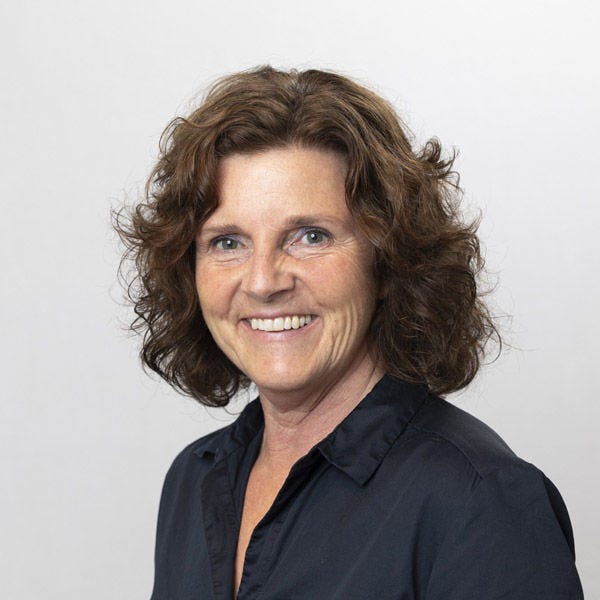
As a counsellor, Silvia Andres works with a team at the relatives’ movement Stand by You Switzerland, supporting family members of people with mental illness. She supported her mother, who suffered from depression, for many years.