How to trim a dog’s nails
A moment of inattention, an unexpected movement – and the cut is too deep. Nail trimming is part of dog grooming. Follow these tips to do it safely and avoid injury.
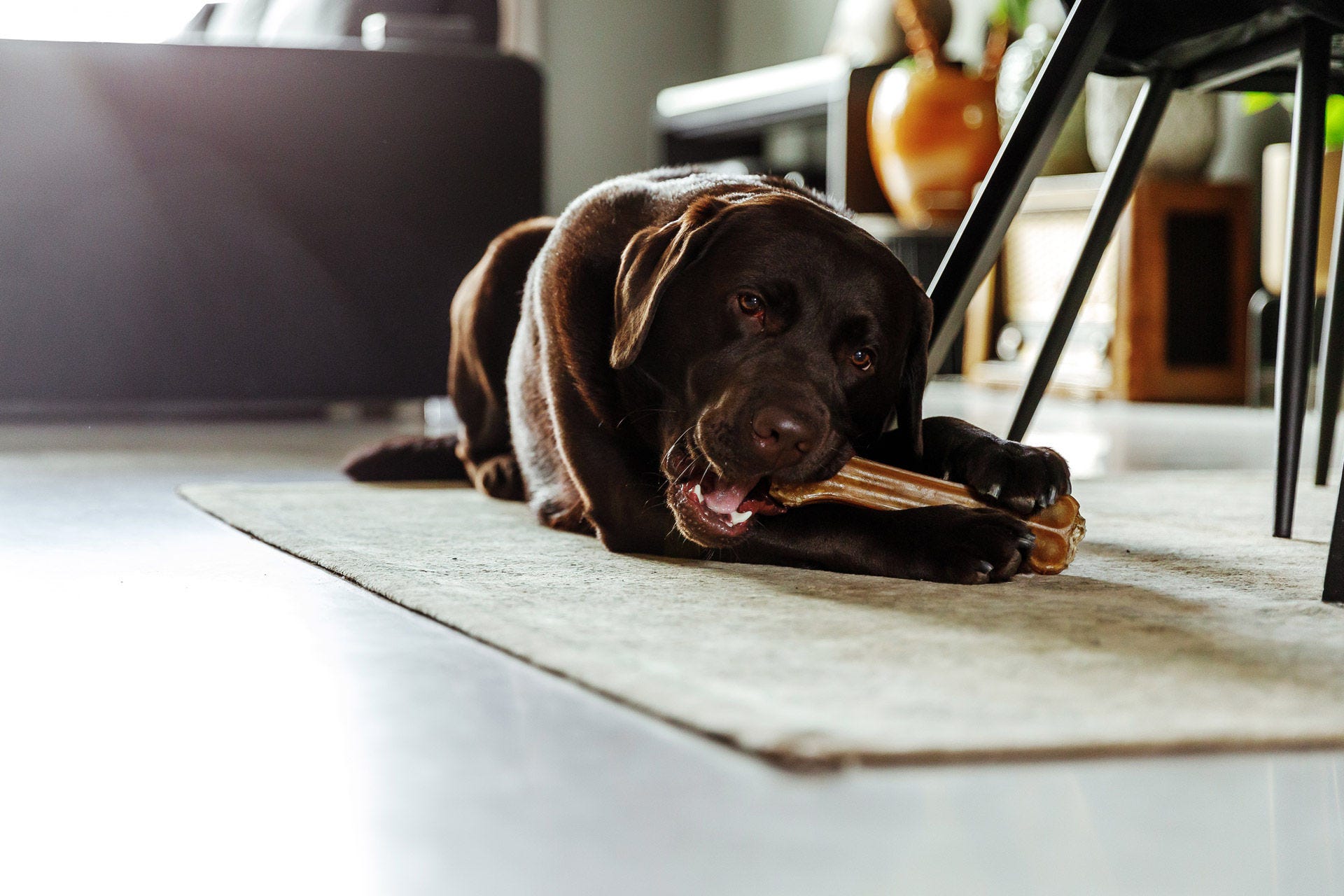
Whether your dog is walking on the pavement or running around in the backyard, its nails often wear down on their own in everyday life But that isn’t always enough.
Especially when there is little movement on hard surfaces – for example in older age or when walks take place mainly on soft terrain – the nails can grow too long and cause health problems This makes proper care, and knowing when and how to trim them, all the more important.
“The dewclaws on the forelegs require special attention,” explains veterinarian Sonja Hermann. “Since they don’t come into contact with the ground when walking, they hardly wear down at all and should be checked regularly and trimmed as needed to prevent ingrown nails.”
Some breeds are particularly prone to developing dewclaws on their hind legs, which also don’t touch the ground. “These, too, can grow inward or get caught – and thus cause injuries,” says Hermann.
“The dewclaws on the forelegs require special attention.”
What happens if you don’t trim a dog’s nails?
If the nails get too long, they can grow inward, get caught on objects and lead to painful paw injuries. “In addition, nails that are too long can cause improper weight distribution on the paws, which can lead to osteoarthritis,” says Hermann.
How can I tell if my dog’s nails are too long?
If you’re not sure whether your dog needs a pedicure, try the simple “parquet test”: If their nails click against the floor when they walk, that’s a sign that they’re too long.
Their gait also provides clues: If your dog places its paws carefully on the ground or walks with unusual stiffness, this may also be a sign Sometimes the toes spread apart more because the nails touch the ground.
Instructions: how do I trim my dog’s nails properly?
If you notice that your dog’s nails are too long, you should proceed with caution. The key is a quiet environment, a dog that is as relaxed as possible and small, controlled cuts.
-
The right tool
To trim your dog’s nails, we recommend using special nail scissors or nail clippers designed for dogs. These are more durable than conventional clippers and prevent the nails from splintering. For anxious or fidgety dogs, a nail grinder can be a gentle alternative.
Guillotine nail clippers are also suitable for beginners or for small dogs. Sharp edges can be smoothed out with a nail file. It is important to use only sharp, well-maintained tools.
-
Here’s how to trim your dog’s nails
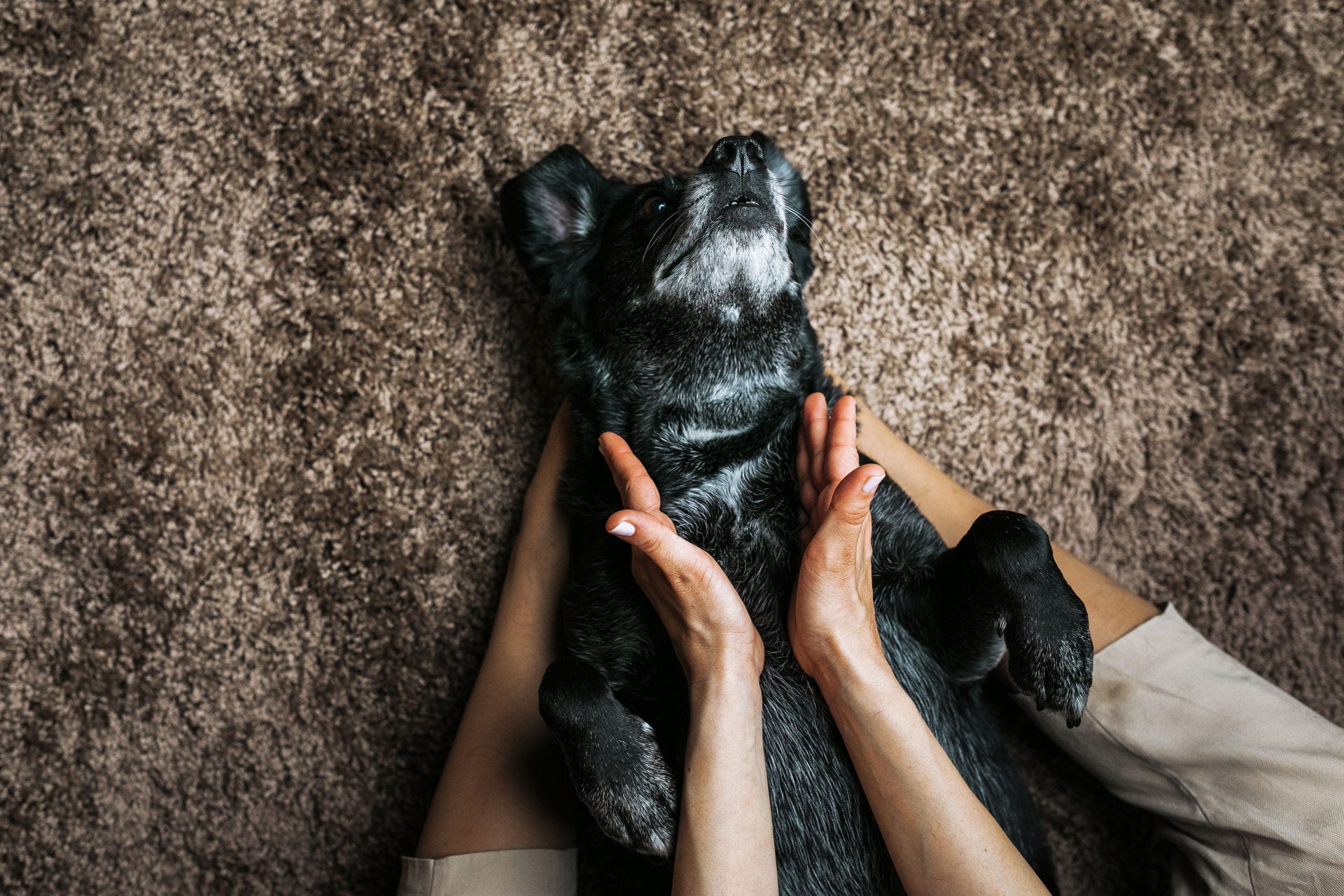
- Prepare/calm your dog: Make sure you’re in a quiet environment and take your time. Pet your dog and slowly get it used to you touching its paws. Many dogs are more relaxed after a walk.
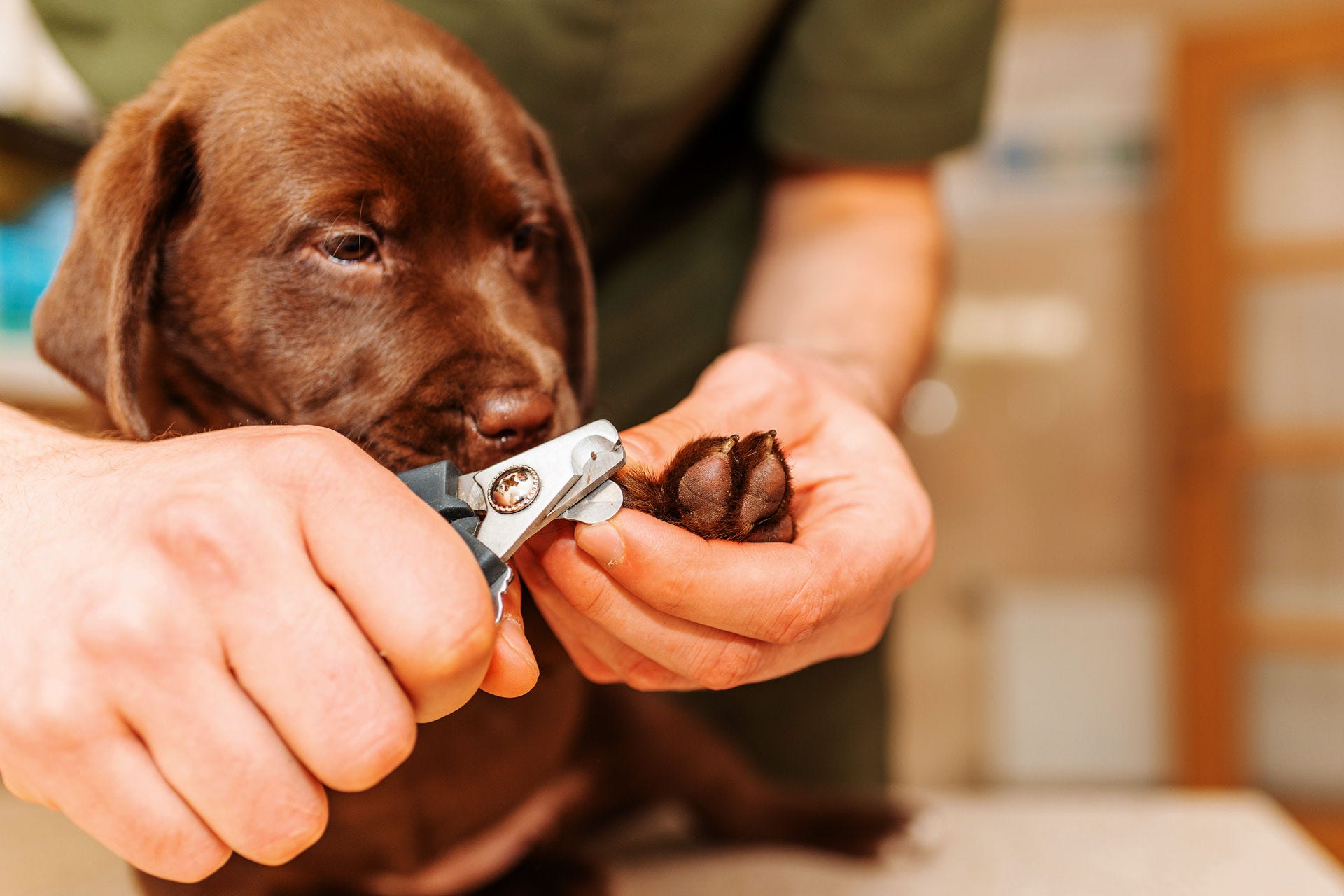
- Position and grip technique: Hold your dog’s paw gently, without applying pressure. It is best to sit next to or slightly behind your dog so that it feels safe. Gently spread the toes so you can see the nail clearly.
- Light-colored vs. dark nails: With light-coloured nails, the blood-rich tissue is usually clearly visible and should not be injured under any circumstances. This is much harder to see with dark nails. In this case, it is best to trim the nail gradually, in very small increments. Looking at the cross-section can help: If it becomes lighter in the centre or has a small dark spot, you should stop cutting. A nail file can also provide peace of mind in such cases.
- Cutting: If in doubt, it’s better to make several small cuts than to cut off too much at once. “The right angle is also important. The cut should point slightly upward, toward the ball of the foot,” says Hermann.
- Nail care after trimming: Check the nails after trimming them, and smooth out any sharp edges with a file or a nail grinder if necessary.
- Reward: Praise your dog after grooming and give it a small treat. That way, it will associate nail care with something positive and will cooperate even better next time.
-
Help, it’s bleeding! What should I do?
Even with the utmost care, bleeding may occur when trimming nails. In the vast majority of cases, however, this is easy to manage. “You can usually stop the bleeding within a few minutes by applying gentle pressure to the tip of the nail, for example with a clean cotton pad,” explains veterinarian Sonja Hermann.
Special cases in nail care
There are a few specific aspects of nail care that require special attention.
-
Trimming a dog’s dewclaw
Dogs have different types of nails or claws. Every dog has a dewclaw on its front paw, which is similar to our thumb. Not every dog has a hind dewclaw. They occur more frequently in some dog breeds and usually have no bony connection to the paw or leg.
The term “dewclaw” is used for both the front and hind claws, so you have to specify whether it’s the front or back legs that you are referring to. One thing is certain, however: these claws usually don’t wear down naturally and can therefore grow inward more quickly.
So check your dog’s front and hind dewclaws regularly and trim them carefully.
-
Trimming a puppy’s nails
In puppies, the nails are usually still soft and grow quickly. Get your puppy used to paw care early on through play.
Trim the nails only slightly and with a steady hand so that the puppy has a positive experience with grooming. Praise and small rewards help with this.
Nail trimming at the vet’s
If your pet’s nails are ingrown or broken, it is advisable to see a veterinarian, as further treatment may be necessary. If you’re unsure, for example if your pet’s nails are dark, it’s also a good idea to visit the vet.
“You can also ask your vet to show you how to trim your pet’s nails,” says Hermann. If you feel confident, you can easily trim the nails yourself.
How much does it cost, and what does pet insurance cover?
Having your pet’s nails trimmed at the vet costs between CHF 15 and 25. The good news is that Sanitas pet insurance covers up to CHF 100 per year for prevention under its Premium category of insurance. This includes nail trimming.
Conclusion: Regular check-ups help prevent pain
Healthy paws are essential for dogs to be able to move around without pain. While the nails of many dogs wear down naturally through exercise on hard surfaces, others require regular grooming.
If you check your dog’s paws from time to time and trim its nails before they get too long, you can prevent pain, improper weight distribution, injuries and complications.
Fortunately, with a little practice, you can easily trim your dog’s nails yourself – and if you’re unsure, your vet can help.

Dr Sonja Hermann, is a veterinarian and has worked at Sanitas since February 2026 as a claims specialist in veterinary services. There, she is responsible for processing and reviewing complex claims, coordinating and communicating with external partners such as veterinary practices, and overseeing quality assurance and knowledge management within Sanitas Pet Insurance.